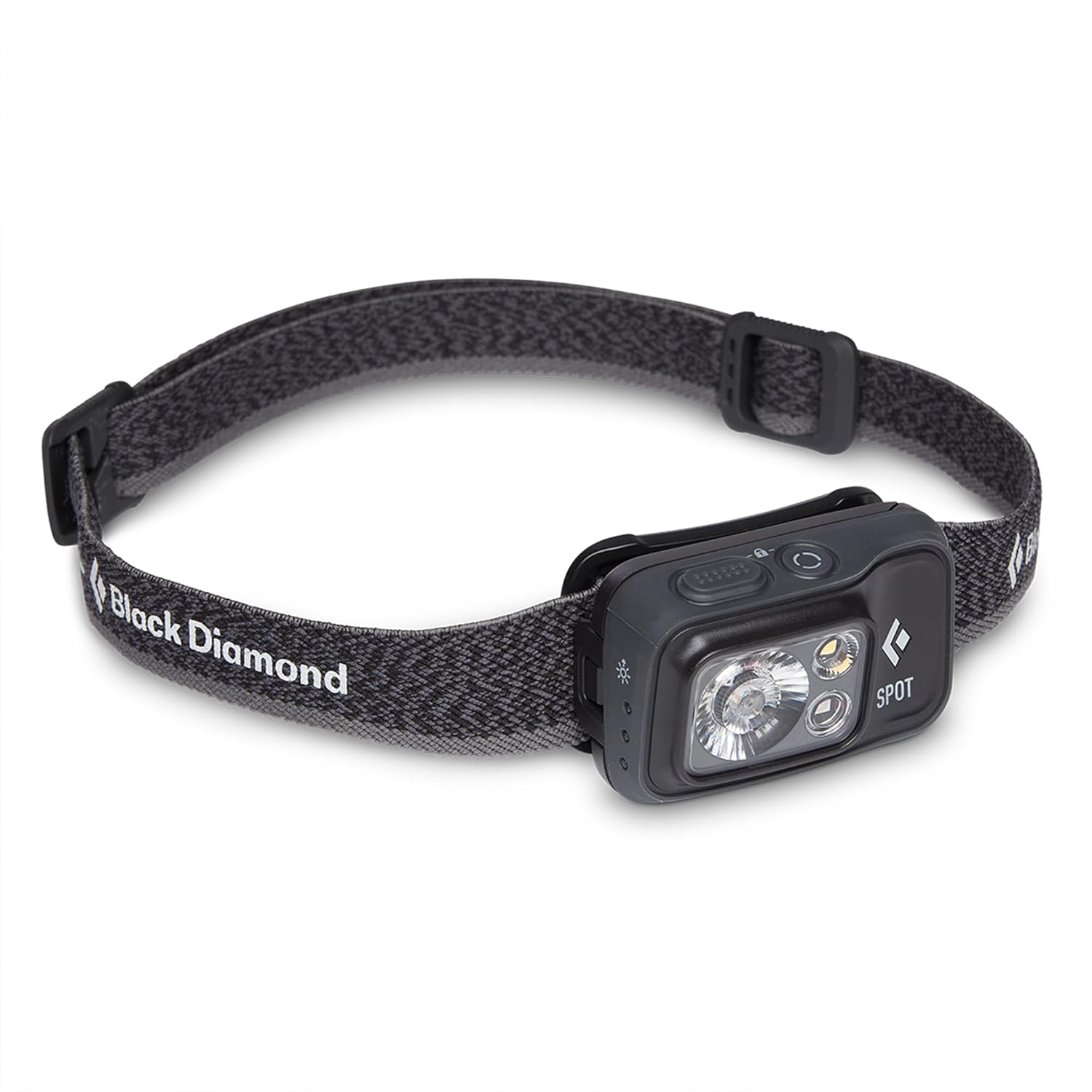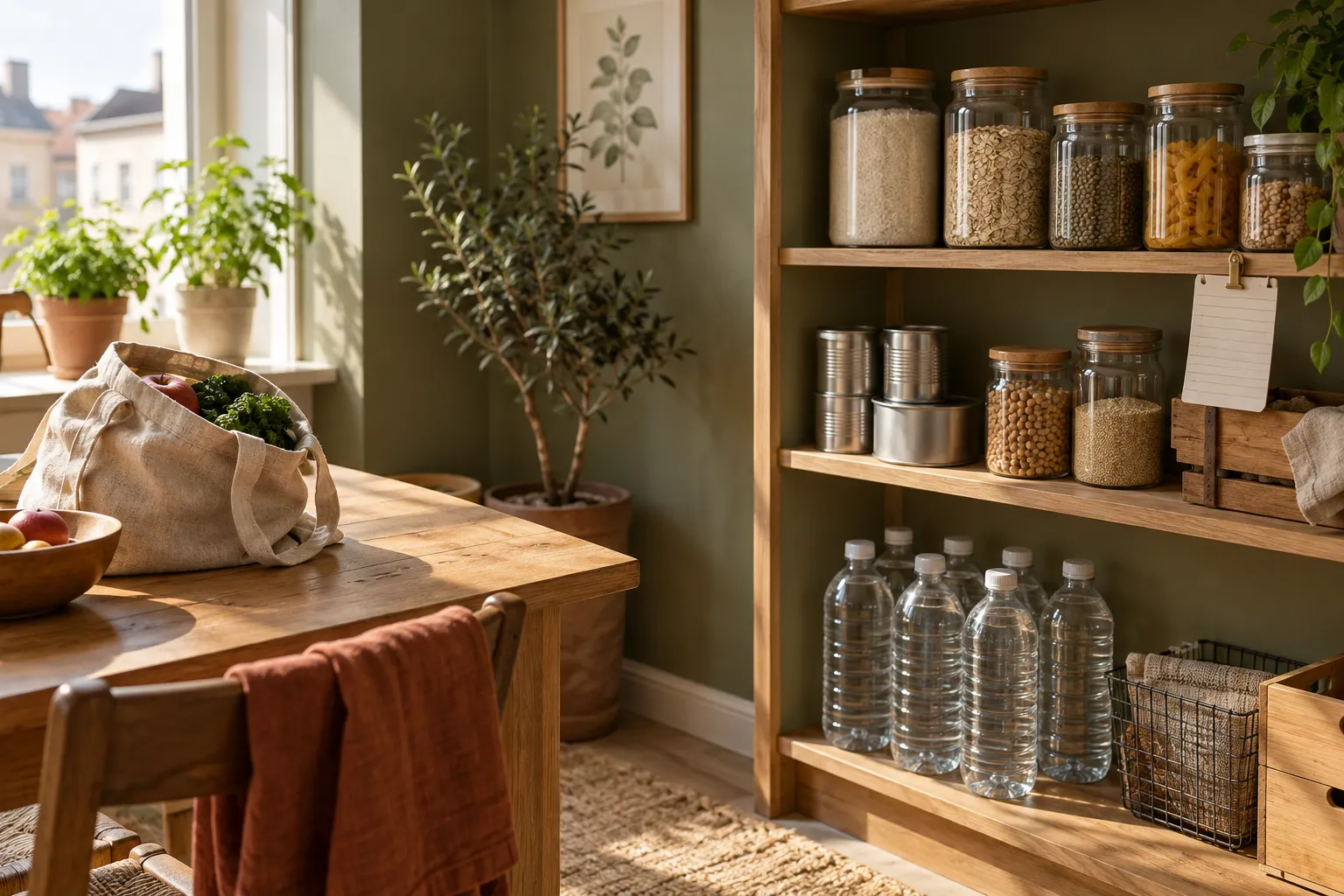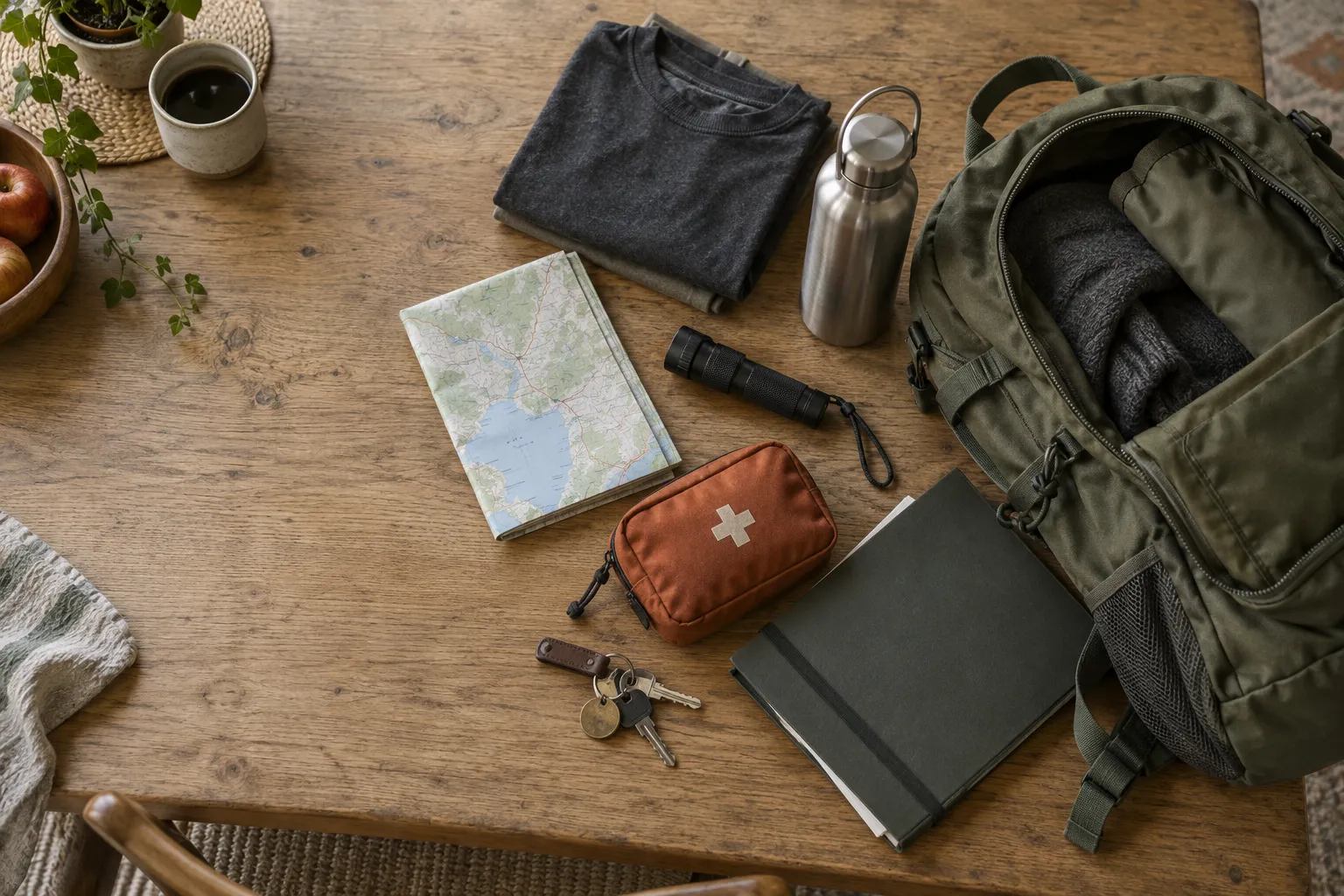
An emergency bag should make leaving home easier when you need to go. It is not a collection of as many survival features as possible. What matters is personal usefulness and a weight and layout you can actually manage. Start with a bag you already own and plan additions deliberately.
Who is this guide for?
Prepared by READYFIELD. Editorial packing plan for households using Germany's BBK emergency-bag guidance. It is not a complete wilderness, extreme-temperature or medical-support kit. Follow local instructions and never delay an evacuation to finish packing.
Sources checked on:
What goes in first?
Start with personal items that are not easily replaced away from home. The BBK includes medication, first-aid supplies, documents, lighting, radio, clothing, hygiene items, water and food. Use these groups as a starting point and assess each for your household.
Glasses, an essential aid or correctly sized children's clothing may matter more than another tool. Personal medicines and special support needs belong in an agreed individual plan, not a universal shopping recommendation.
Describe the likely journey
Consider a temporary stay with relatives or at accommodation identified by authorities. How would you reach it, who accompanies you and what would you need during the journey? Those questions narrow the selection more effectively than choosing a generic bag of a particular capacity.
Also record who needs help carrying items or finding their way. Agree that assistance in advance. Do not label a route safe without local information; roads and paths may be blocked or unsuitable during an incident.
Pack by access, not product category
Easy to reach: Put items you need quickly in accessible compartments and less urgent additions further inside. Check that you can reach personal papers, lighting and rainwear without emptying the whole bag.
Clearly grouped: Small labelled pouches help someone else find things. Avoid ten similar bags with no obvious purpose. Protect delicate items appropriately.
Easy to find again: A packing sketch may help, but keep it simple: three or four understandable areas are easier to remember than a complicated location plan for every individual item.
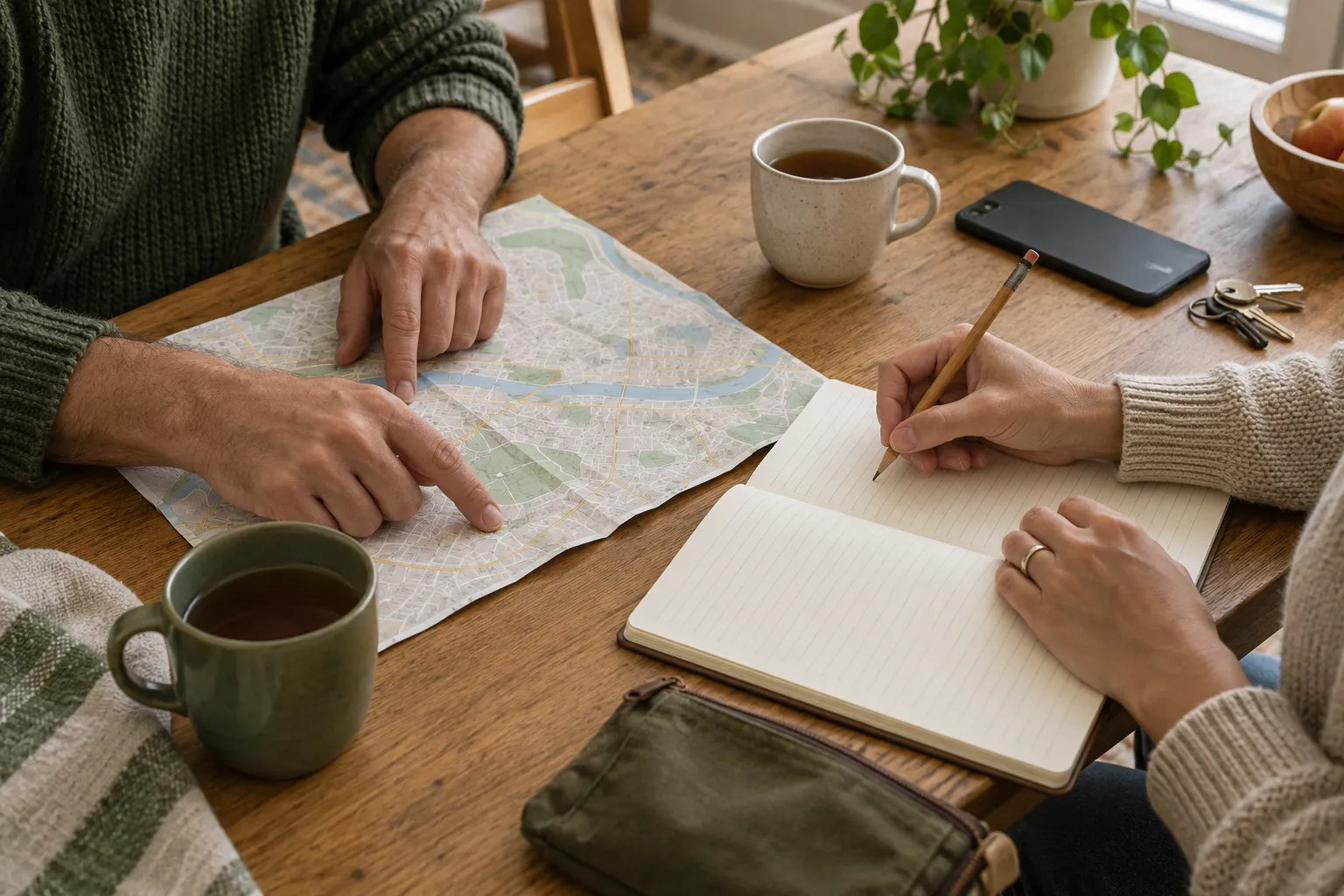
Keep a final-additions list outside the bag
Some items stay in daily use and cannot remain packed. Keep a short list beside the agreed storage location for things such as a phone, keys, essential personal aids and current documents. The BBK also identifies items that need adding when you leave.
The list is a reminder, not a reason to wait: in immediate danger, leaving the area and following responders' instructions take priority. Make sure other household members know where the bag and list are.
Let the carrying check shape the contents
Put the planned contents in a bag you already own. In a safe everyday setting, try lifting, wearing, setting down and opening it. A universal weight limit says little without knowing your mobility and journey.
If the bag is too heavy or awkward, review each item by its purpose. Share the load only in ways the people involved can actually manage. A new backpack does not solve overpacking; assess straps, fit and access while wearing it.
Additions need a clear purpose
An additional protective layer may serve a particular situation. The linked SOL bivvy is not an established substitute for a suitable sleeping bag or shelter, and we assign it no comfort-temperature rating. A compact first-aid kit can group supplies but does not replace reviewing the contents, training or personal additions.
Before each purchase, ask what gap it fills, how you use it and what else must be carried with it. Those answers matter alongside its packed size.
Review after changes in the household
Children grow, contact details change and everyday equipment gets replaced. Use those changes as a prompt to review the bag. Also check packaging, dates and device operation according to the manufacturers' instructions.
Put missing or used items straight onto the personal list. A regular short review is easier to maintain than infrequent complete replanning. Record the last check and any outstanding issue that needs discussing with someone else.
FAQ: Is a pre-filled emergency backpack enough?
It can be a starting point, but it does not automatically answer personal questions. Review each item, the actual supplied contents and carrying suitability. Documents, essential aids, correctly sized clothing and individual support still need planning. A high item count says little about whether the kit fits your needs.
FAQ: Do I need outdoor experience?
A well-organised bag starts with understanding your own routine. Choose equipment you can operate and practise basic handling beforehand. Luggage for temporary accommodation is not automatically a kit for a multi-day wilderness trip.
Wartime preparedness: pack for your possible destination
The BBK describes emergency luggage as help for the first days away from home. A possible destination therefore deserves as much attention as the backpack. Discuss potential stays with people you trust in advance and treat unconfirmed possibilities as unresolved.
Consider our hypothetical example: one person needs to carry a cat carrier while another assists a relative. Two additional large bags may make that arrangement impractical. Check the distribution with a calm carrying trial in normal conditions. Individual ability and the actual situation matter; a universal weight rule or an especially large backpack cannot replace that check.
Plan the arrival: what your host needs to know
Prepared luggage is only one part of a possible evacuation. If staying with relatives or friends is an option, discuss in advance how many people and animals they can actually accommodate. Record what has been agreed and what remains unresolved. Accommodation organised by authorities follows the current local arrangements.
Use these conversation prompts: who is coming, what assistance is needed, which personal items must be brought, and how will the host learn that the plan has changed? Share personal details only with participants who need them. An earlier agreement does not automatically make the route or destination suitable during a later emergency.
Sources and review dates
- Notgepäck · Bundesamt für Bevölkerungsschutz und Katastrophenhilfe (BBK) · checked
- Make a First Aid Kit: What to Include · American Red Cross · checked