An emergency will not wait for your phone to charge. Imagine the power is out, your phone has no signal and your family is away from home. Does everyone know what to do next? This hypothetical scenario gets to the heart of civilian preparedness: making decisions while you still have time.
Who is this guide for?
For households in Germany. Guidance is based on the authorities listed below; examples and planning aids are READYFIELD editorial work. Current local instructions take priority. Both language versions have the same geographic scope.
Sources checked on:
Start with the household you actually have
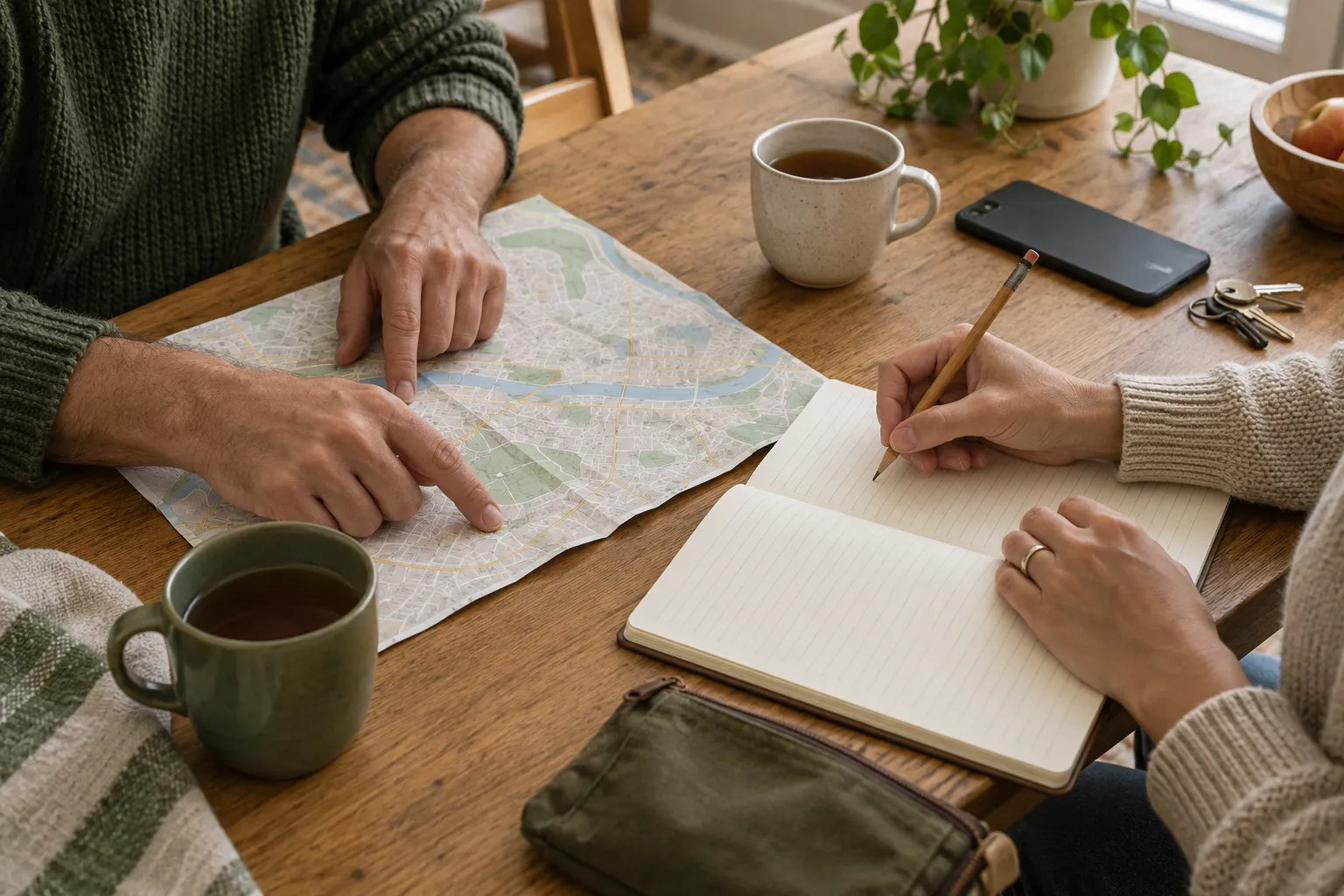
Take a sheet of paper and walk through an ordinary day: drinking, eating, sleeping, using the bathroom, getting information and reaching loved ones. For each task, note what depends on electricity, tap water, the internet or a journey.
The broad idea of preparing for war becomes a set of specific jobs. This works for a shared flat, someone living alone or a small rented apartment.
Then mark three unanswered questions you can resolve today. Perhaps you own a flashlight but nobody knows where it is. Your water might be behind heavy storage boxes. Only one person may have the school’s phone number. This inventory is our editorial planning exercise; it does not assess the military situation.
Start with three days and work towards ten
For Germany, the BBK recommends aiming to manage independently for ten days; three days of supplies already provide a useful start. This is a preparedness target, not a prediction of how long a war or supply disruption would last.
Choose a manageable shopping step: add whatever your household would run short of first to your next ordinary grocery trip. Use three columns: already available, planned requirement and still missing. Count the people who actually live with you. Record possible guests separately rather than counting the same vague reserve several times. Keep the list with the supplies and update it when something is taken.
A full cupboard is only the beginning
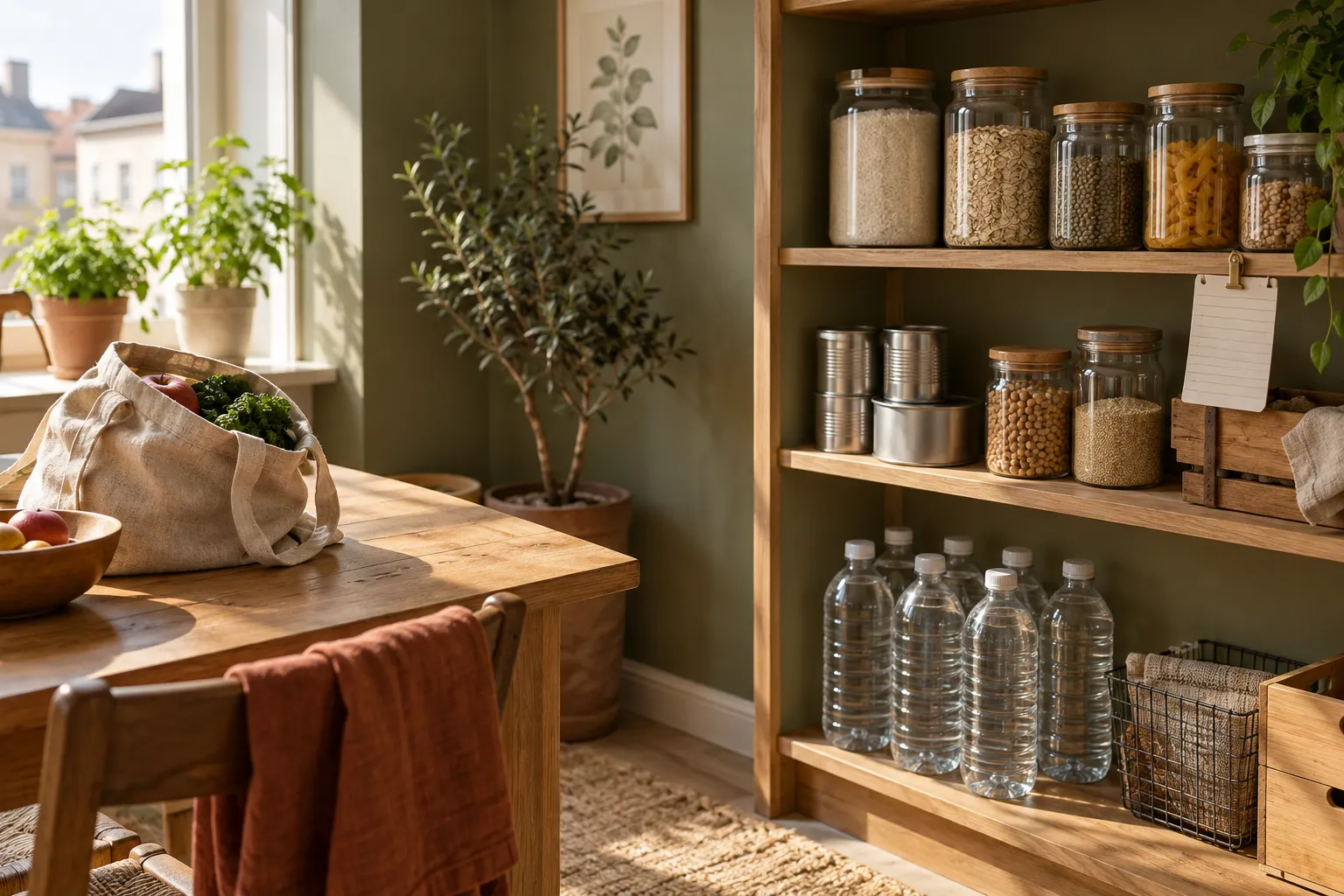
The BBK identifies shelf-stable foods and meals that can be eaten without cooking as useful supplies. Check a complete example day: what would breakfast, lunch and dinner look like with the stove unavailable? Can you open each package? Does the food suit everyone who will eat it?
Our suggestion is to put that day’s ingredients on the table, together with the utensils and drinking water they require. This exercise reveals gaps that a list of package counts can hide. Water needs a separate calculation; use the existing water-storage guide and its clearly identified national guidance. An outdoor filter is not blanket evidence that any available water will be safe to drink.
Planning example for adults in Germany: the BBK gives at least 1.5 litres of fluid a day, plus 0.5 litres of water if cooking. At a combined two litres per person per day, two adults for three days require twelve litres. This is a drinking-and-cooking baseline; hygiene, pets and higher individual needs require additional provision.
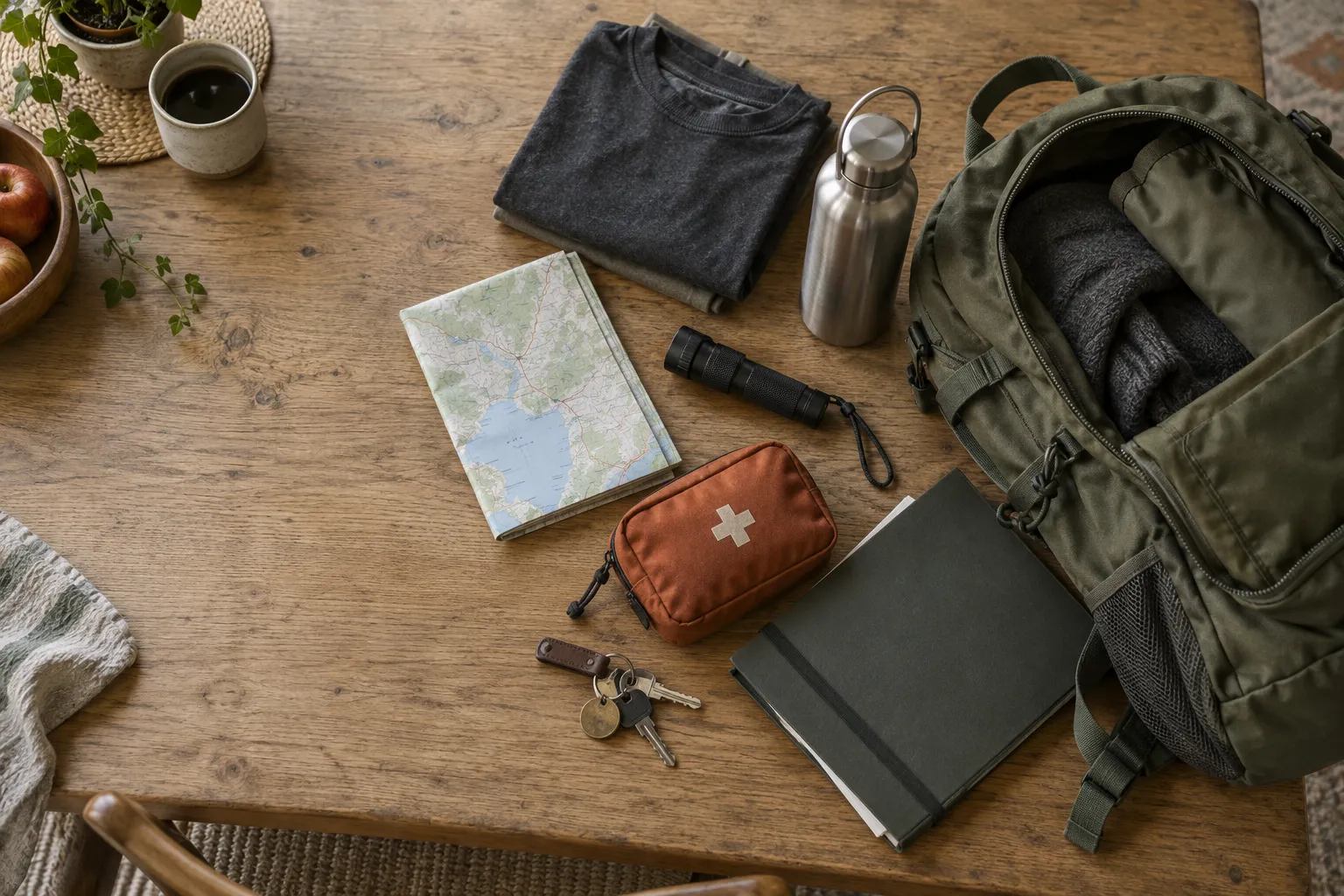
No power. No signal. Two separate problems.
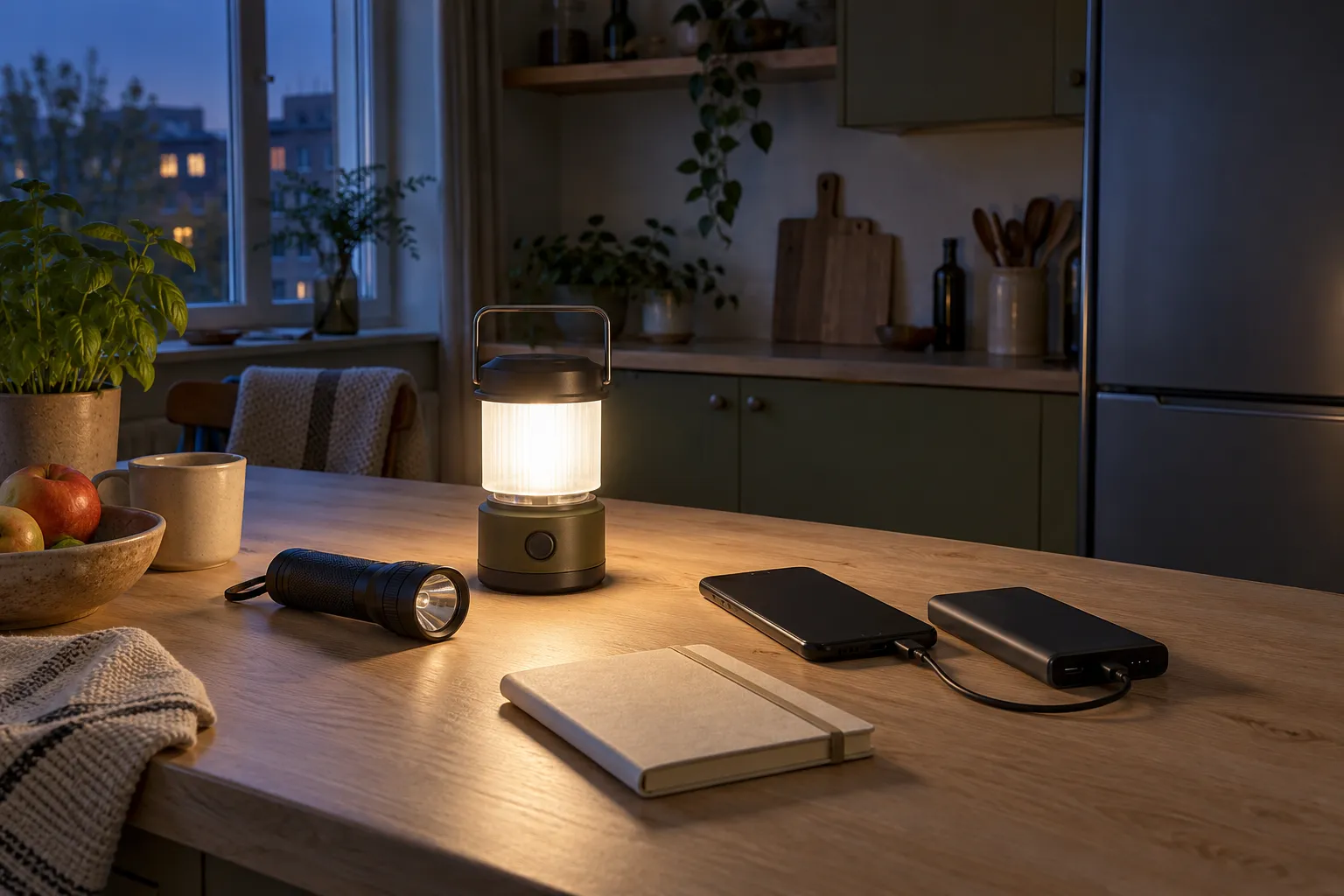
A charged power bank can supply electricity to a phone; it cannot restore a failed mobile network. For information during network outages, the BBK recommends a radio with a power source independent of the mains.
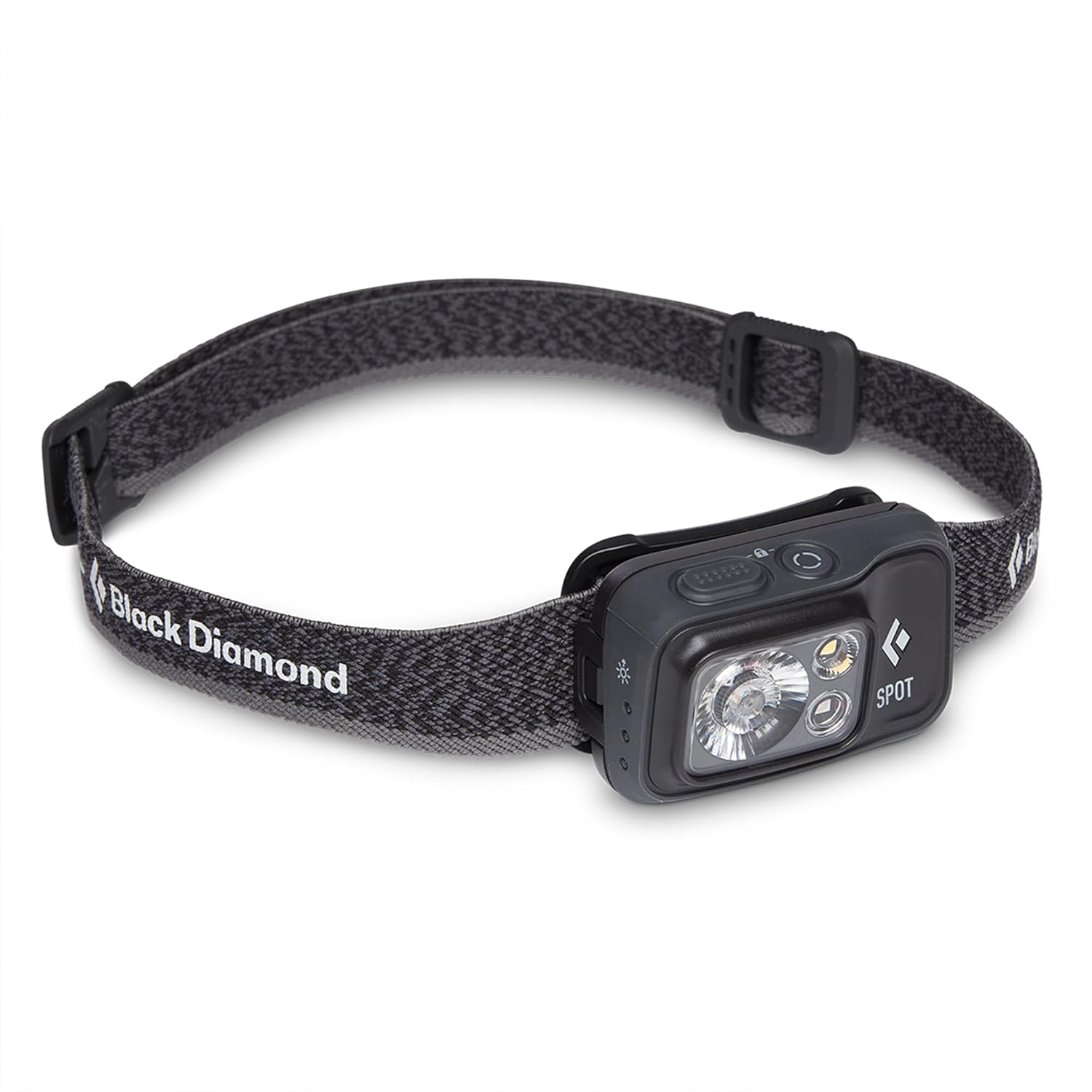
Check your equipment by task: a light should let you read a label, a radio should receive a station available where you live, and a charging cable should fit the device you actually use. Record the model, accessories and storage location together. Then ask another household member to use everything without a running explanation.
Anything confusing belongs on your improvement list. The radio and power-bank guides cover the individual selection questions.
Shelter deserves its own plan
Work out which rooms and routes you know in your home and which questions remain open. Is the basement door locked? Who can open it? Can someone using a walking aid reach the proposed area? You can discuss these practical questions with the building manager and other residents in ordinary circumstances.
The appropriate place depends on the hazard. The BBK’s shelter guidance explicitly distinguishes between different events. A blanket rule such as “always go to the basement” is therefore insufficient. The companion shelter guide explains the German guidance for explosion hazards and helps you prepare a short location card for your household. It does not replace a building assessment.
If you need to leave: plan personal essentials
The BBK describes emergency luggage as support for the first days away from home and includes personal medication and documents. Apply that idea to your own circumstances: which things would be difficult to replace quickly? Which do you use every day and therefore cannot keep permanently packed?
Write a short add-at-departure card for those everyday items and keep it with the bag. Glasses on the bedside table or keys in a coat have a specific location; “important things” does not. Work out the packing arrangement in advance. During immediate danger, searching for possessions must not delay getting to safety.
Your family needs the same version of the plan
A plan held in one person’s head is difficult for everyone else to use. Discuss where each person normally spends a weekday and what arrangements already exist with school, care providers or work. Our suggestion: ask everyone to explain the shared plan in their own words. That exposes different expectations before they become a problem during an emergency.
The family guide takes you through a contact card, responsibilities and a calm rehearsal. Someone living alone can use the same approach with a trusted person who has agreed to help. Do not publish private phone numbers or medical details as a public packing list; keep them in your personal records.
The loudest message is not automatically the right one
The BBK advises checking the original source, supporting evidence and other trustworthy reports before forwarding information. A dramatic claim deserves that scrutiny.
Build a short source list now: your municipality, an official warning service and a reputable regional news broadcaster. Our editorial addition is to record the time and affected location whenever you write down an update.
An accurate quotation may refer to another district or an earlier point in time. If you cannot confirm a message, identify that uncertainty rather than turning it into instructions for other people.
Buying equipment: give every purchase a job
Describe the need before searching for a product: “I need light to read the label on my bag in a dark hallway.” You can then compare existing equipment and new options against the same job. For water containers, access and handling matter; for electronics, consider controls, connections and power requirements.
A military-sounding product name tells you little about whether it suits you. Collect unanswered questions about the exact version and its instructions. The linked categories support selection without requiring you to replace your entire household setup. Add justified purchases to your personal equipment list, then check whether they perform the intended task when they arrive.
What to do today
Keep the first round manageable: write the inventory, close one supply gap, speak to a contact person and agree on the next household review. Keep unresolved points visible. An unanswered question is more useful than a box ticked too quickly.
FAQ: What should I prepare first?
Start with water, usable food, light, reliable information and personal needs. Check what you already have, then write down essential contacts and unresolved arrangements. This identifies the gaps that actually affect your household.
FAQ: Is an emergency go bag enough?
A go bag supports you when you need to leave home. Household supplies serve a different purpose: helping you stay at home when shopping or utilities are disrupted. Plan for both situations without counting the same supplies twice.
FAQ: How much safety can preparedness provide?
You can close specific supply gaps and simplify arrangements. No stockpile or piece of equipment guarantees protection from every consequence of war or a particular time when help will arrive. Adapt your plan to current local instructions.
Sources and review dates
- Vorsorgen für Krisen und Katastrophen · Bundesamt für Bevölkerungsschutz und Katastrophenhilfe (BBK) · checked
- Essen und Trinken bevorraten · Bundesamt für Bevölkerungsschutz und Katastrophenhilfe (BBK) · checked
- In der Krise informiert sein · Bundesamt für Bevölkerungsschutz und Katastrophenhilfe (BBK) · checked
- Schutz suchen · Bundesamt für Bevölkerungsschutz und Katastrophenhilfe (BBK) · checked
- Wenn es schnell gehen muss: Das Notgepäck · Bundesamt für Bevölkerungsschutz und Katastrophenhilfe (BBK) · checked
- Vertrauenswürdige Informationen erkennen · Bundesamt für Bevölkerungsschutz und Katastrophenhilfe (BBK) · checked