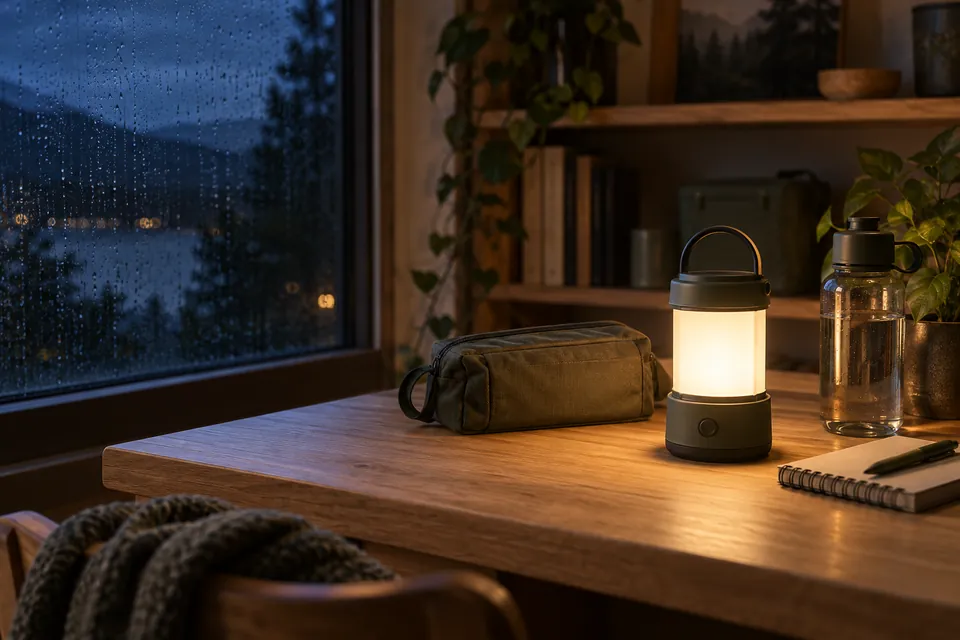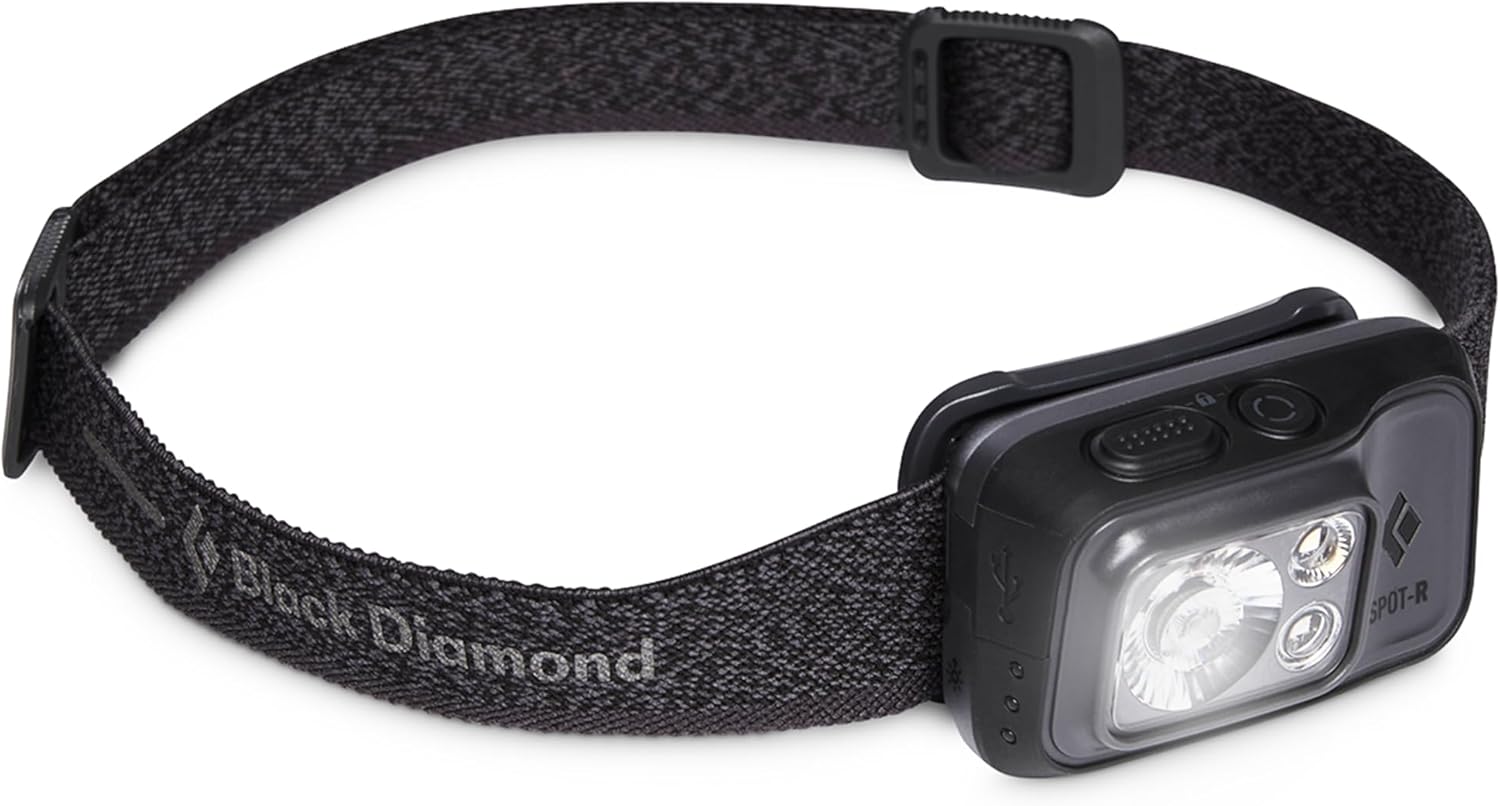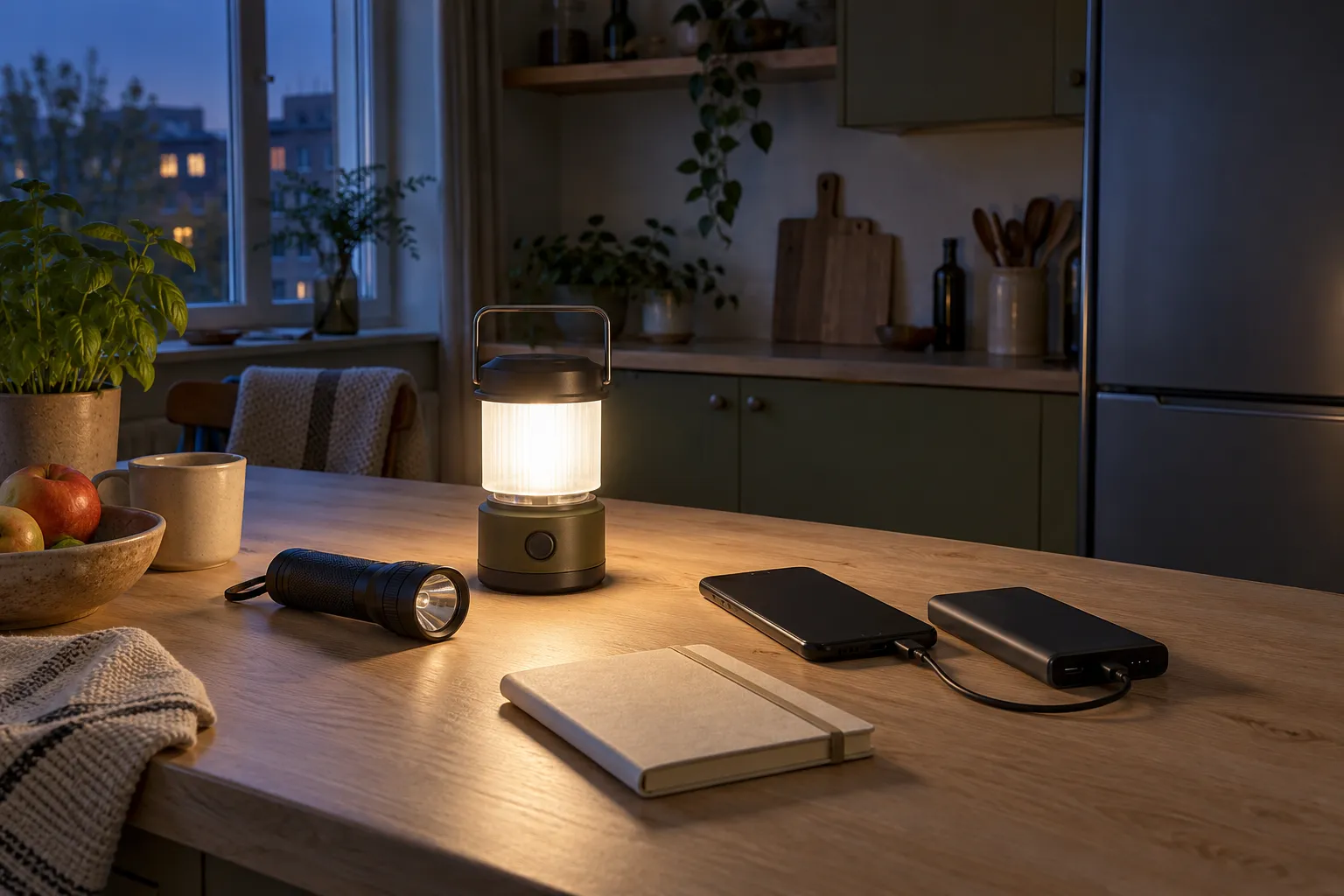
Your home falls quiet. No hum from the fridge, no hallway light, no Wi-Fi. You reach for your phone, and habit takes over. Those small reflexes deserve a second look. Here are seven common mistakes and practical alternatives. The examples are editorial everyday scenarios; they do not establish the cause of a current outage.
Who is this guide for?
For households in Germany. Both language versions have the same geographic scope. Berlin guidance provides examples; grid operators, reporting services and assistance points differ locally. This is not live outage reporting. Follow current local instructions. FoodSafety.gov contributes general food-safety guidance from the US.
Sources checked on:
Turning a dark street into a story
Several windows outside are dark. Someone in a group chat writes “the whole country”. That does not turn your observation into a confirmed situation report. A plausible explanation is not automatically the right one. The BBK advises using reliable sources and questioning information.
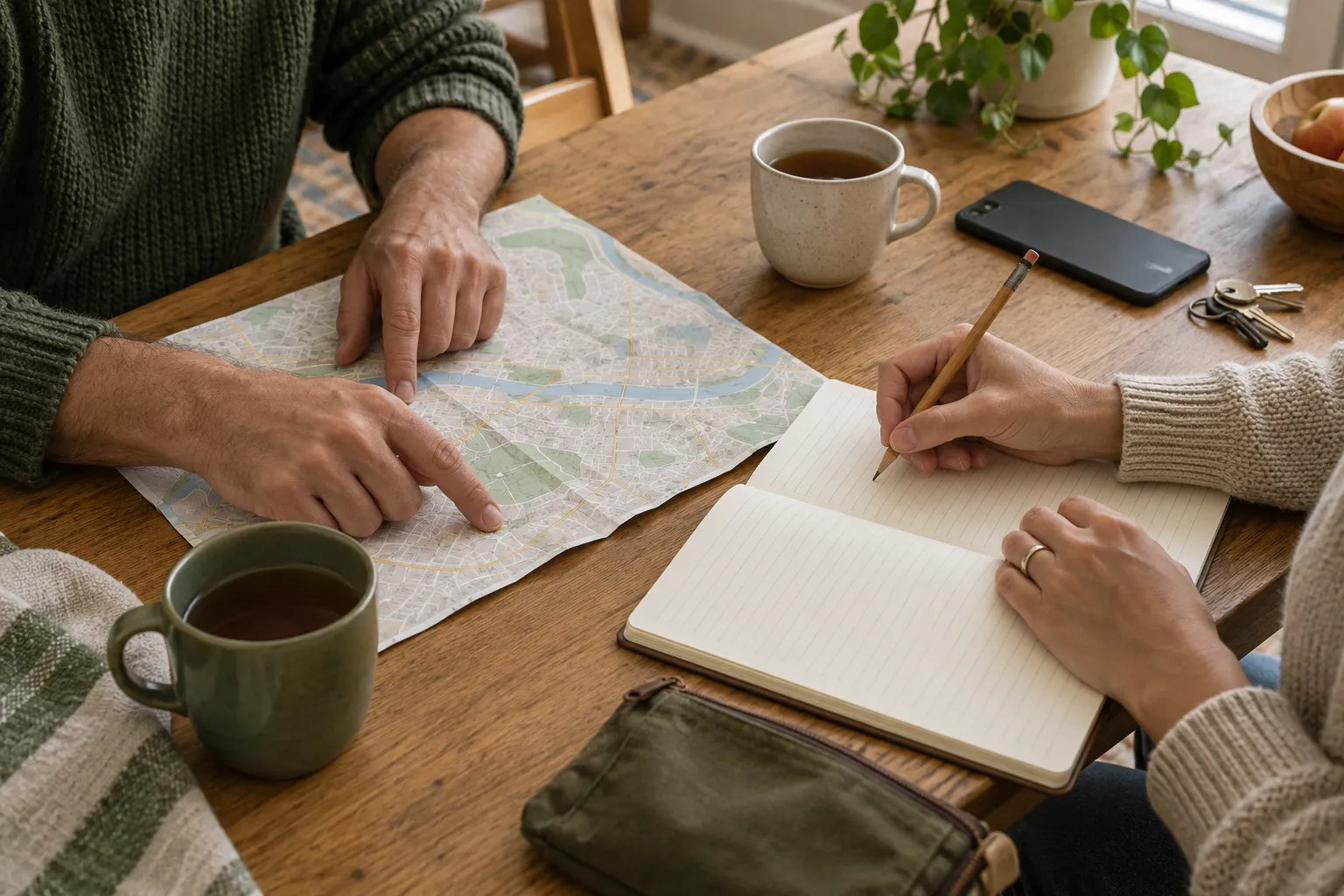
Our practical suggestion: separate observations from confirmed updates on paper. “Lights out in this building” goes in one column. “Grid operator reports an outage in our area, updated at 20:15” goes in the other. This makes it easier to pass on what you actually know. An old message without a timestamp offers little help.
Opening the fridge every few minutes
Checking feels reassuring, but it lets cold air escape. The BfR explains that cooling during an outage depends partly on the appliance, how full it is and the surroundings. A fixed number of hours would not clear every item for consumption.
Keep cold storage closed as much as possible. Record when the outage began and how long it lasted, if known. Assess further use against temperature history, food type and official guidance. Smell or taste does not prove safety. If in doubt, do not eat perishable food requiring refrigeration. A randomly cold night on a balcony is not controlled refrigeration.
Making your phone the permanent torch and news feed
A phone can briefly help you find your bearings. If you have a separate light, it does not have to illuminate the home continuously. It may also be your communications device. Refreshing a feed constantly does not necessarily produce new information.
Our suggestion: use separate lighting you already own and keep important messages concise. Put the phone, matching cable and charged power bank somewhere your household knows. Check official updates purposefully. A power bank can charge a compatible device; it cannot restore a failed mobile network or provide an unavailable internet connection.
Bringing the camping stove indoors
The cooker is cold, so a camping stove looks like a quick solution. Equipment intended for outdoors does not belong in the kitchen, stairwell or an enclosed tent. Combustion can produce dangerous exhaust gases; opening a window does not turn an outdoor appliance into a safe indoor one.
Start with suitable food that can be eaten without heating. Use an outdoor cooking setup only under the manufacturer’s conditions in a suitable outdoor location. Heating and cooking appliances have different purposes. Do not use a barbecue or outdoor stove as an improvised room heater.
Experimenting with the electrical installation
Repeated experimentation cannot reliably diagnose an electrical fault. Do not open covers or work on wiring. Stromnetz Berlin states that changes to a home installation belong in the hands of qualified electrical contractors. That includes connecting backup power.
Our practical suggestion: describe only what you observed to the appropriate contact: affected rooms, any unusual smell and when the interruption began. Do not put yourself at risk to collect more details. Never connect a generator to a household socket through an improvised arrangement.
Using emergency services as an outage hotline
“When will power return?” is a question for the grid operator, not an emergency call. Berlin-Pankow’s civil protection guidance makes that distinction too. For a fire or an immediate threat to life in Germany, call 112.
For future preparation, keep two separate entries: your grid operator’s official outage service and local emergency information. A different city appearing in search results is not automatically responsible for your connection. Do not expect a general blog to confirm whether a local assistance point is currently open.
Forgetting the whole thing when power returns
Lights on, back to normal? Understandable, but a brief review is useful. Spandau’s civil protection guidance recommends initially leaving nonessential appliances off or restarting them at different times. Check their condition and instructions. Damaged or wet electrical equipment needs qualified assessment.
Our suggestion: recharge the reserves you used and return equipment to its place. Note just three practical improvements, such as an accessible light, the correct outage-service address and a missing charging cable. A short list of achievable tasks is more useful than a large order unrelated to what was actually missing.
Sources and review dates
- Stromausfall: Was tun bei einem Stromausfall? · Bezirksamt Pankow von Berlin · checked
- Stromausfall · Bezirksamt Spandau von Berlin · checked
- Korrektes Kühlen von Lebensmitteln im Privathaushalt · Bundesinstitut für Risikobewertung (BfR) · checked
- In der Krise informiert sein · Bundesamt für Bevölkerungsschutz und Katastrophenhilfe (BBK) · checked
- Vorsorge und Handeln bei Stromausfall · Bundesamt für Bevölkerungsschutz und Katastrophenhilfe (BBK) · checked
- Resilienz für Haushalte · Stromnetz Berlin · checked
- Food Safety During Power Outage · FoodSafety.gov (US Government) · checked