A useful food reserve moves through everyday meals and is replenished afterwards. It contains food you tolerate and can actually prepare. The challenge is less about owning a large shelf than keeping a reliable overview: what is available, what can be eaten without electricity and what belongs on the next shopping list?
Who is this guide for?
Prepared by READYFIELD. Editorial stock organisation for private households. BBK planning guidance applies to Germany; supporting food-safety information comes from the US FDA. Personal dietary needs, package instructions and local authority guidance take priority.
Sources checked on:
What belongs in a useful food reserve?
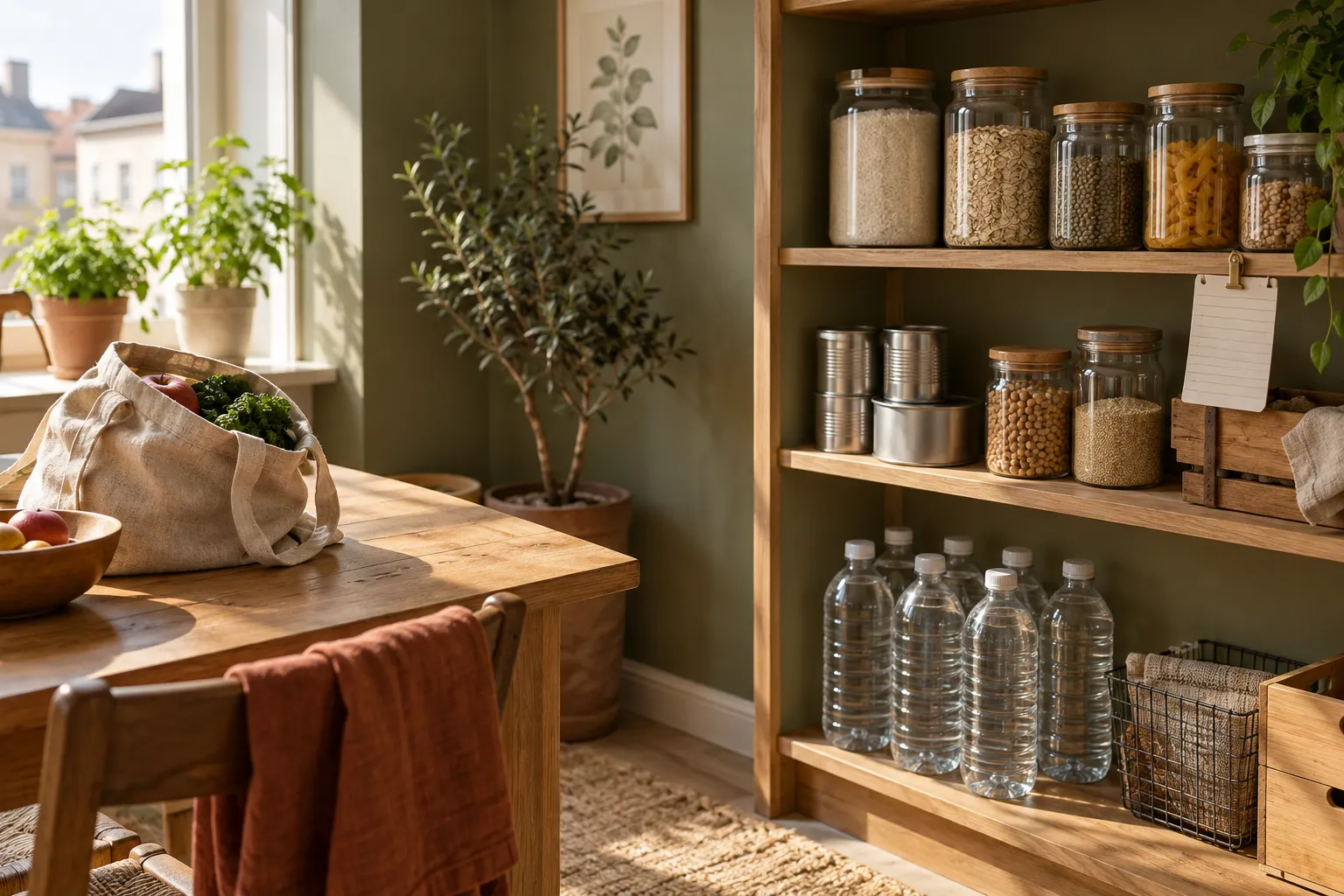
Start with familiar shelf-stable food and some meals that do not need cooking. In Germany, the BBK recommends aiming for ten days of supplies while recognising three days as a useful start. The selection must suit the people eating it.
A large package is not an advantage if its contents are unsuitable or cannot be stored appropriately after opening. Write down possible meals first, then calculate the shopping quantities.
A daily meal plan reveals missing parts
Use a normal day as a starting point: breakfast, other meals, drinks and personal additions. For each combination, consider water, heat, a can opener or particular utensils. One simple planning structure includes a familiar shelf-stable breakfast, a meal suitable without heating and another easy-to-prepare option.
It is not a universal dietary recommendation. Try portions and suitability in everyday use before storing several days of the same plan. Pets need a separate entry too.
Distinguish ready-to-eat food from water-dependent food
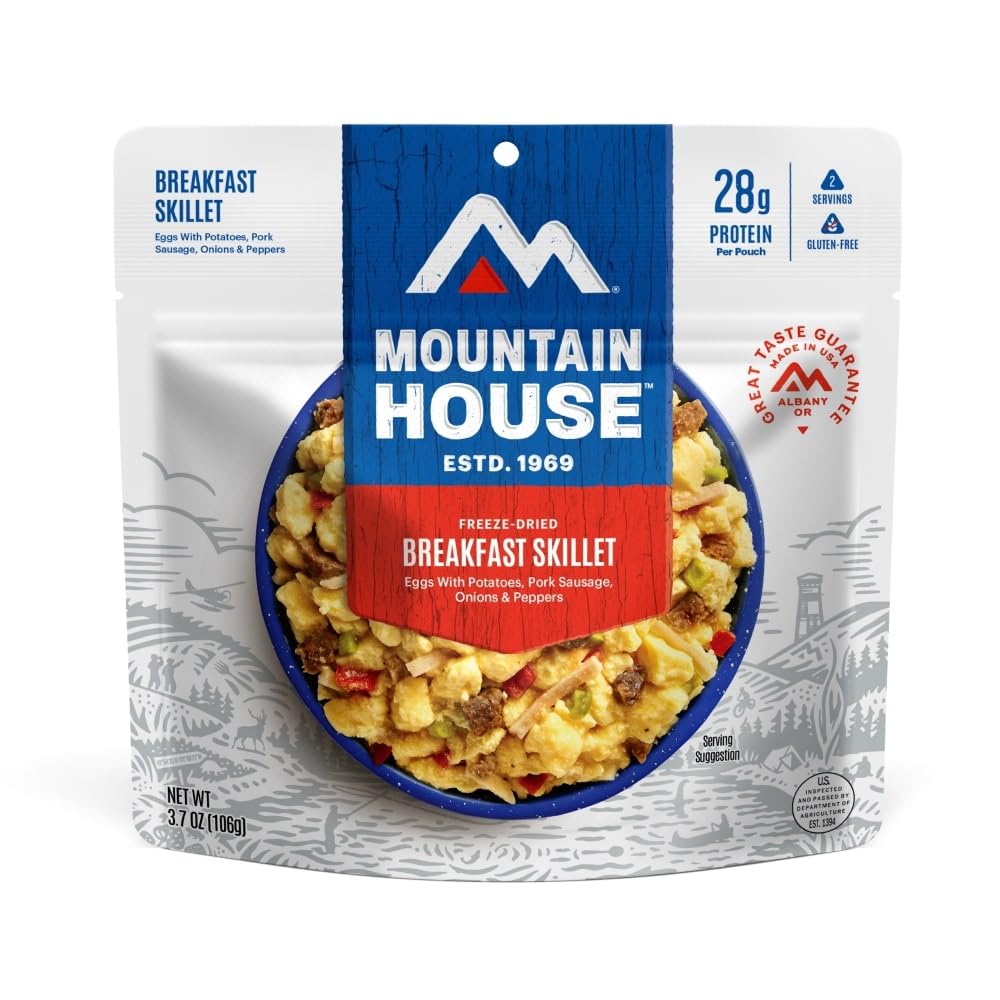
Sort meals by effort: ready to use, requiring water, or also dependent on a safe cooking arrangement. This reveals whether the entire reserve relies on one preparation method. Freeze-dried pouches may be an addition, but they need the water quantity and preparation stated on the label.
A manufacturer's serving count does not guarantee a full day's nutrition. The linked Mountain House single pouch is a specific product to assess; check ingredients, allergens and your actual portion needs before storing larger quantities.
Separate the reserve threshold from everyday use
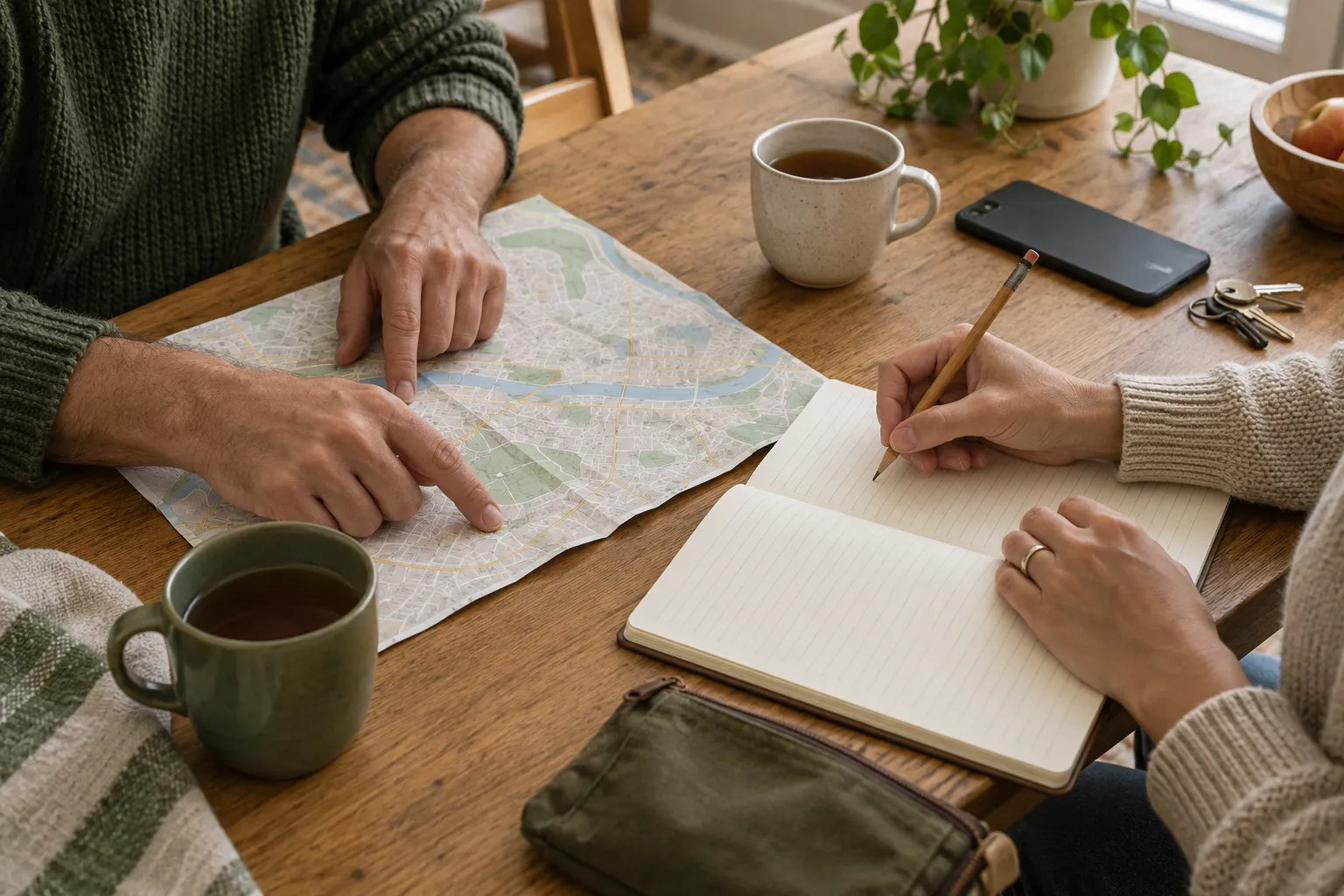
Give regularly purchased items a target quantity based on the meals you planned. Mark the point at which restocking is needed. The rule is simple: record what you take and replace it at the next suitable shopping trip.
A reserve can be used; it should not disappear unnoticed. Keep the list short enough to maintain in daily life. Products you never use deserve a new decision instead of another year at the back of the cupboard.
Restock around the next relevant date
Arrange packages so that items needing earlier use are reached first. This follows the rotating-reserve approach described by the BBK. Keep the product name, date and storage directions visible. Preserve the necessary information if removing outer packaging.
Opened products may have different storage requirements from sealed ones, so follow their specific labels. Give the next planned meal an accessible location. You do not need a complicated inventory app when dates, quantities and replacements remain clear to everyone involved.
Assess refrigerated food separately
Refrigerated stock needs different treatment during an outage from shelf-stable food. The FDA describes around four hours of cooling for an unopened refrigerator and approximately 48 hours for a full freezer, or 24 hours when half full. These are not blanket permissions to eat the contents.
Keep doors closed, consult the FDA's specific temperature and food guidance and do not judge safety by taste or smell. Meals that do not depend on a working cold chain are therefore useful in the planned reserve.
A small trial helps prevent unsuitable purchases
Plan an ordinary evening around one proposed reserve meal. Check that the opener, water and utensils are available and that the quantity suits you. Record changes immediately: a different portion size, a missing tool or food nobody enjoys.
There is no need to turn off the electricity or improvise risky cooking arrangements. The benefit is familiarity. Buy more once those basic questions are answered; a discounted bulk package does not replace understanding your own needs.
FAQ: Do I need specialised emergency food?
Not necessarily. Familiar food with suitable storage characteristics can form the foundation. Specialist products should serve a specific purpose, such as a suitable meal for a trip. Compare preparation, water needs, ingredients, portions and storage requirements before adding them to the plan.
FAQ: What if the reserve keeps shrinking?
Simplify the replacement rule. A visible list beside the shelf and a target quantity for each item are often enough. Be realistic about what your household normally uses. If the stock system does not fit that routine, change the system before buying more storage boxes.
Wartime disruption: what can you eat without a working kitchen?
For the German preparedness context, the BBK identifies ten days of independent supplies as the aim and three days as a useful start. Translate that period into meals your household can actually use. Consider a hypothetical cupboard full of pasta where almost every planned meal depends on a working stove. The inventory then looks more complete than the usable menu.
Check one example day without cooking or additional shopping. Beside each meal, record the utensils and opening tools it needs. This arrangement is a planning aid; it does not guarantee suitable nutrition for every individual circumstance. Make special dietary needs an explicit part of the plan.
Give shared supplies a visible restocking rule
For shared households, our suggestion is to record the agreed minimum, actual stock and person responsible for the next shopping trip for each supply group. Whoever takes an item marks the change at the storage location. This avoids a second, invisible inventory in an app maintained by only one person.
Also identify which packages belong to household supplies and which are allocated to personal emergency luggage. One bottle cannot be in two places at once. If you plan to share an item between daily use and travel, record that dependency. Supplies should make decisions easier rather than introduce new accounting questions under pressure.
Sources and review dates
- Essen und Trinken bevorraten · Bundesamt für Bevölkerungsschutz und Katastrophenhilfe (BBK) · checked
- Food and Water Safety During Power Outages and Floods · U.S. Food and Drug Administration (FDA) · checked
- Vorsorgen für Krisen und Katastrophen · Bundesamt für Bevölkerungsschutz und Katastrophenhilfe (BBK) · checked