Local reception comes first when choosing an emergency radio. A crank, light and charging port are secondary questions. When browsing Amazon.com offers, distinguish the market clearly: a US model may have useful features, but its weather alerts depend on the appropriate regional broadcasting system.
Who is this guide for?
Selection criteria for Germany and the United States. Prepared by READYFIELD using BBK and NOAA/NWS guidance. This is not a reception test or a promise that every alert will be received. Follow local authorities and current broadcaster information.
Sources checked on:
What must an emergency radio do?
It needs to receive your chosen information broadcasts where you are and operate without a wall socket. Germany's BBK recommends a battery or crank radio for prolonged outages. The label emergency radio is not itself proof of reception capability.
Before buying, write down where the radio will be used, which stations you want and who will operate it. A straightforward device with suitable reception options may serve that task better than a feature-rich model intended for another country.
NOAA Weather Radio belongs in a US reception plan
NOAA Weather Radio All Hazards carries information from the US National Weather Service. It requires a compatible receiver and local transmitter coverage. NOAA lists seven frequencies between 162.400 and 162.550 MHz.
This weather service is not the same as ordinary FM broadcast radio. For a US location, consult the linked coverage maps and the particular receiver's manual. A NOAA label does not give a radio a German weather-warning function.
In Germany, start with the local broadcaster
List the information programmes you want to receive at home and check the broadcaster's current reception information. Then compare it with the modes explicitly supported by the device. FM, DAB+ and NOAA refer to different capabilities; one must not silently stand in for another.
Apply the same check to a radio you already own as to a new purchase. Place it in the intended location and try reception yourself. An internet radio app also depends on a phone, its network connection and their power supplies.
Distinguish listening from automatic alerts
A radio may play a weather channel without offering every desired automatic alert feature. Check which operating mode must be active and which settings are required. NOAA explains selecting the correct frequency and, on suitable receivers, geographic SAME codes.
That does not mean every NOAA radio supports those settings. Compare capabilities individually using the exact model number. The linked Midland ER310 is explicitly a US model; its functions must match your location and intended use.
Read the power plan beyond feature icons
Write down each documented operating and charging option separately. Which batteries does the radio take? Is a rechargeable battery included, can it be replaced and which cable charges it? A USB input does not establish a phone-charging function.
A crank without reliable performance information does not justify a particular listening duration either. Keep the power supplies and manual together. If planning to use several functions simultaneously, check whether the documentation covers that combination; separate advertised figures cannot simply be added together.
Make a reception and controls card
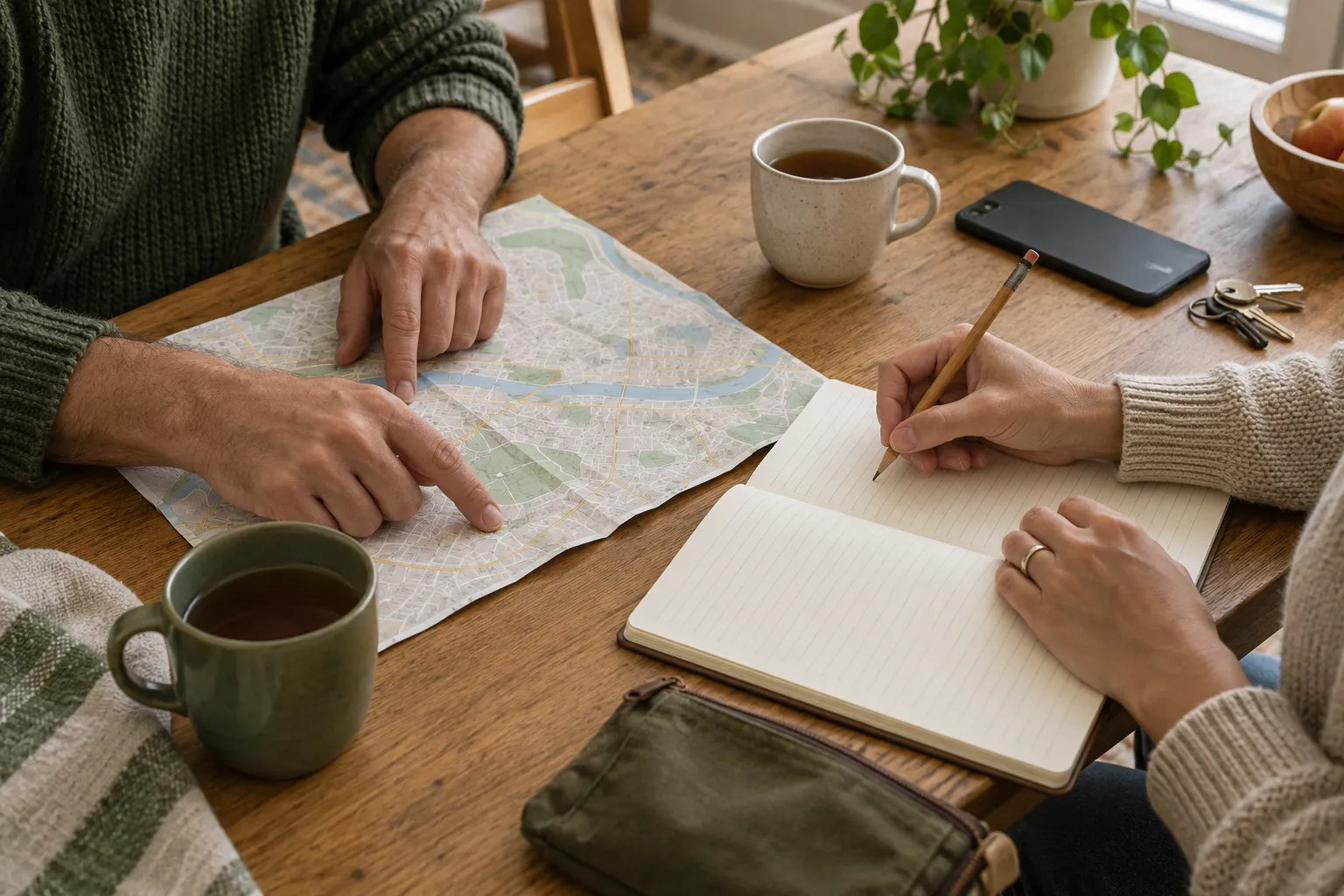
A small card beside the radio can record its model, tried location, chosen station, frequency or preset, power source and last personal check. Describe the steps so another person can follow them. Practise volume, tuning and changing the power source in normal lighting.
Keep the card even if the display shows station names. Review the entry after changing devices or moving home; a location that once worked well is not a permanent reception guarantee.
Plan more than one information channel
A radio is one part of the warning channels recommended locally. Also record official community information sources and ways to contact neighbours or relatives. Avoid a plan in which every channel depends on the same phone and depleted battery.
The purpose is an understandable route to responsible sources, not continuous monitoring of every message. Products in the radio category help compare equipment; they replace neither a local reception check nor official instructions during an incident.
FAQ: Is a crank radio automatically the best choice?
No. Suitable reception, understandable controls and a workable power supply come first. A crank may be an extra option when its role is documented. Do not convert minutes of cranking into listening hours or phone charges without verified data.
FAQ: Will a US radio work in Germany?
That depends on the exact broadcast bands supported. Compare them with the German stations you want to receive. Its US NOAA alert feature does not become a German warning service. Also check supplied accessories, charging equipment and warranty arrangements separately when importing.
Plan radio use during an extended stay in shelter
If several people spend an extended period in a planned shelter area, decide who operates the radio and where updates will be recorded. Add an operator, backup person and shared place for notes to your reception plan in advance. Use the reception and power details established when checking your actual device.
The key limitation is that reception can differ between rooms. Do not leave a protected area during immediate danger to search for a better signal. A receiver does not guarantee information everywhere. Use available official warning channels and follow local instructions. Shared arrangements help people pass on an announcement with its full context.
Pass on the complete context of an update
The BBK advises checking a message’s origin and evidence and not spreading doubtful claims without verification. For listening together, we add a simple recording rule: keep the broadcaster, time, affected location and specific instruction separate.
“They have to leave” is a poor summary of an announcement that may concern just one street. Write down who the instruction applies to. Mark any passage you did not hear fully as unclear. If no current connection is available for cross-checking, do not claim you have confirmed the information. Keep notes together so you can distinguish newer updates from older ones.
Sources and review dates
- Vorsorge und Handeln bei Stromausfall · Bundesamt für Bevölkerungsschutz und Katastrophenhilfe (BBK) · checked
- NOAA Weather Radio All Hazards: coverage maps · NOAA / National Weather Service · checked
- NOAA Weather Radio frequencies and information · NOAA / National Weather Service · checked
- In der Krise informiert sein · Bundesamt für Bevölkerungsschutz und Katastrophenhilfe (BBK) · checked
- Vertrauenswürdige Informationen erkennen · Bundesamt für Bevölkerungsschutz und Katastrophenhilfe (BBK) · checked